
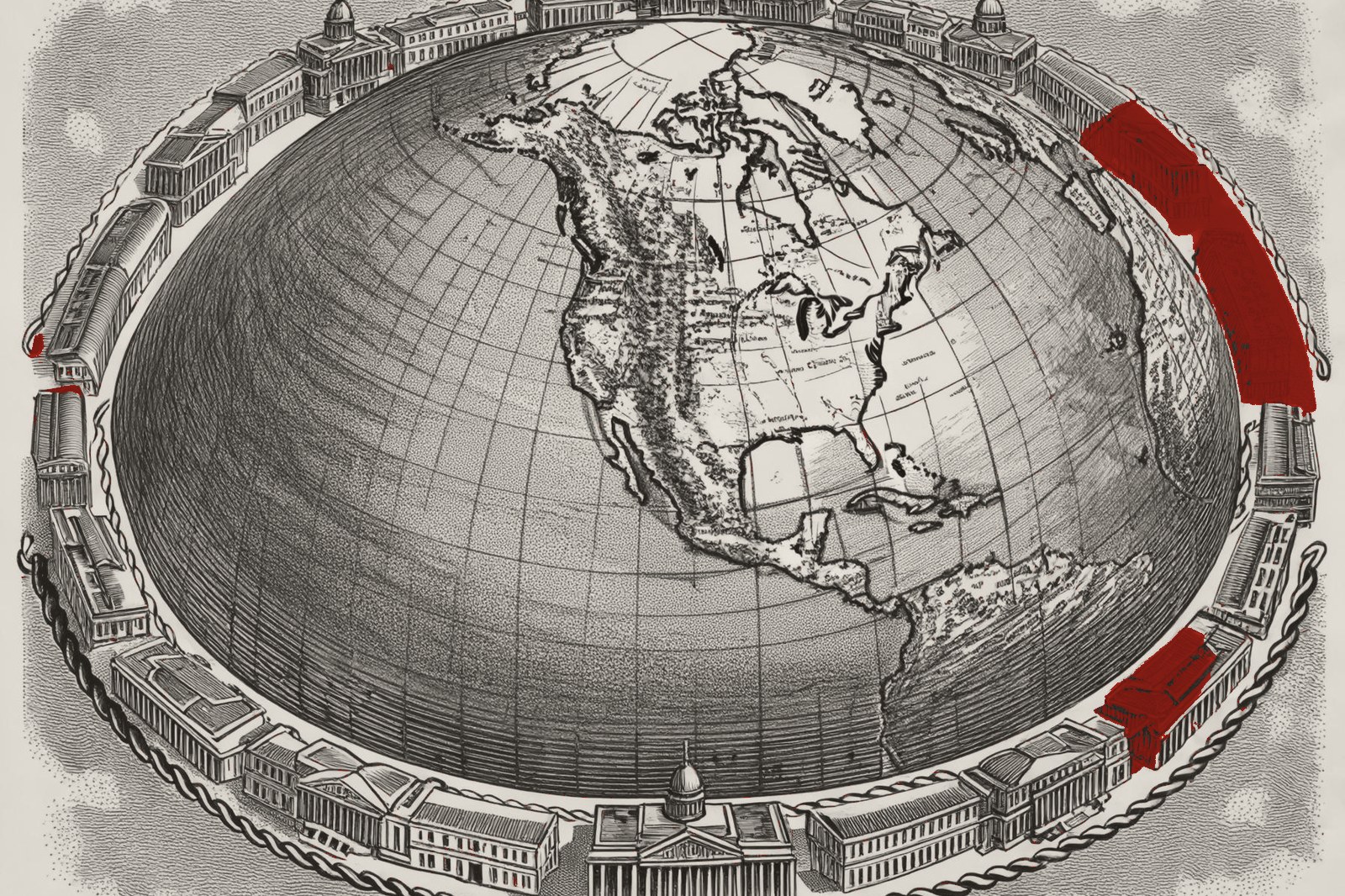
El 16 de julio de 2026, en el Departamento de Estado, Marco Rubio hizo algo que casi nadie leyó completo. Frente a delegaciones de más de 60 países anunció el nacimiento de una nueva arquitectura antiterrorista global. La prensa lo cubrió como un "summit contra Antifa". Error. Lo que se firmó ese día es una doctrina. Y las doctrinas no se quedan en Washington. Viajan. La última vez que Estados Unidos construyó una arquitectura así fue después del 11 de septiembre. Veinte años después esa arquitectura había reordenado el planeta.
Yo leí el discurso completo. Tres veces. Y lo crucé con cada documento que he trabajado los últimos dos años: designaciones como Organización Terrorista Extranjera, que en inglés se abrevia FTO, expedientes del Distrito Sur de Nueva York, órdenes de la Red de Control de Delitos Financieros del Tesoro estadounidense, conocida como FinCEN, sanciones de la Oficina de Control de Activos Extranjeros del Tesoro, conocida como OFAC. La conclusión es incómoda: el discurso no es sobre Europa. Es el manual de operación de lo que viene para América Latina. Y México es el primer territorio donde ya está operando.
La estructura del discurso: cinco movimientos
El discurso de Rubio tiene una arquitectura precisa. No es retórica. Es ingeniería. Cinco movimientos, cada uno con una función jurídica y política concreta.
Primer movimiento: demoler la doble vara. Rubio abre declarando muerta la era en que la violencia de motivación izquierdista se trataba como "exceso de idealismo". Cita 2020, cita las ciudades que no procesaron a nadie. La función de este movimiento no es histórica. Es habilitante: si la vieja categoría era un privilegio ideológico, eliminarla autoriza usar contra estos actores todas las herramientas que antes se reservaban para el terrorismo yihadista. Todas. Financieras, migratorias, de inteligencia.
Segundo movimiento: la genealogía hemisférica. Aquí está el detalle que casi nadie notó. Antes de hablar de Berlín o de Lyon, Rubio habla de América Latina. Tupamaros en Uruguay. Montoneros en Argentina. Las guerrillas colombianas FARC y ELN. Sendero Luminoso en Perú. Los campos de entrenamiento de Castro. Según el propio discurso, entre 1970 y 1980 el 93 por ciento de los atentados terroristas en Occidente vino de la extrema izquierda. La cifra es su cifra, del discurso, y la cito como tal. Pero la función del movimiento es clara: anclar la nueva doctrina en suelo latinoamericano desde el primer minuto. El hemisferio no es un anexo. Es el origen del relato.
Tercer movimiento: la tesis de la red transnacional. "No son células aisladas. Son redes interconectadas." Esa frase es la llave maestra de todo el edificio. Porque en derecho estadounidense la diferencia entre un delito local y una red transnacional es la diferencia entre un juzgado estatal y el arsenal completo del poder federal: la ley antimafia conocida como RICO, la ley de poderes económicos de emergencia llamada IEEPA, sanciones extraterritoriales y el delito de apoyo material al terrorismo. Cuando Washington declara que algo es una "red transnacional", está declarando jurisdicción sobre el mundo entero.
Cuarto movimiento: la infraestructura. Rubio enumera lo construido en doce meses. El memorándum presidencial identificado como NSPM-7, que ordena a todas las agencias de inteligencia y policía "disrupt, identify, defund, debank, arrest, prosecute". Cuatro organizaciones europeas designadas como Organizaciones Terroristas Extranjeras en noviembre. Recompensas de hasta 10 millones de dólares por información sobre su financiamiento. Talleres de coordinación policial con países socios, el próximo en Alemania. Fíjese en los verbos: defund y debank. Quitar fondos. Quitar bancos. La doctrina no promete bombas. Promete asfixia financiera.
Quinto movimiento: la coalición. Más de 60 países sentados en la misma sala. Intercambio de inteligencia, estrategia policial coordinada, targeting financiero conjunto. La frase final del edificio: "desmantelaremos estas redes ladrillo por ladrillo".
Lo que la prensa no vio
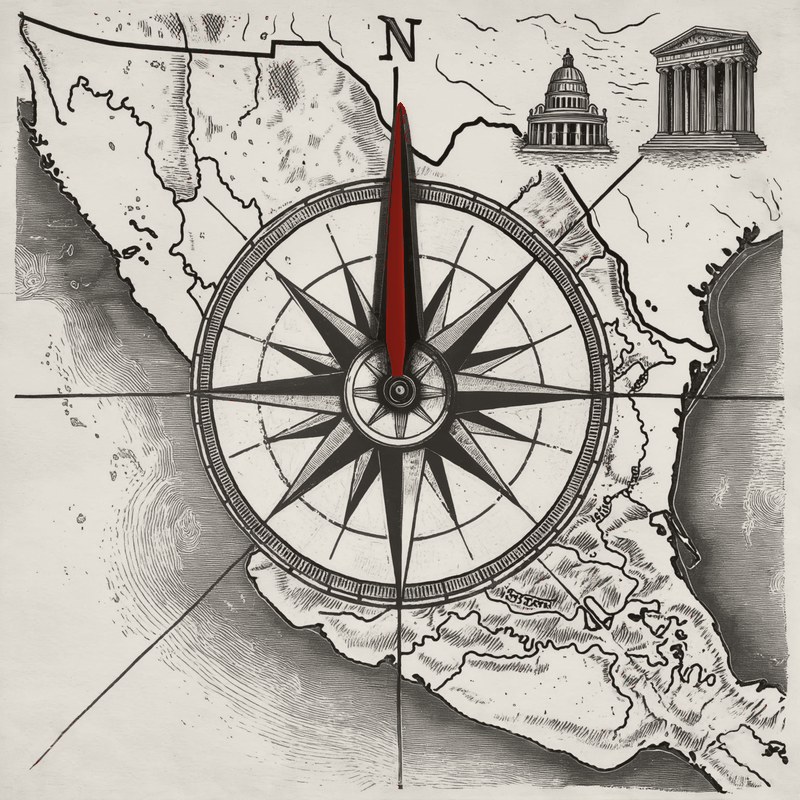
Casi toda la cobertura se quedó en la superficie: si Antifa existe o no como organización, si el summit era propaganda, si Stephen Miller dijo tal o cual cosa. Debate legítimo. Pero irrelevante para lo que importa. Lo que importa es el precedente operativo. Estados Unidos acaba de demostrar, por segunda vez en 18 meses, que puede tomar una categoría jurídica reservada durante décadas al terrorismo internacional clásico y aplicarla a actores completamente distintos. Primero fueron los cárteles, en febrero de 2025. Ahora son redes políticas violentas. La categoría FTO dejó de ser una lista. Se convirtió en un instrumento de política exterior de uso flexible. Y los instrumentos flexibles se expanden.
Hay un segundo dato enterrado en el discurso que vale oro. Rubio conecta explícitamente las redes de extrema izquierda con "estados extranjeros hostiles": los proxies iraníes y la red de inteligencia del régimen cubano, "inextricablemente ligada", dice, a movimientos de izquierda "en y más allá de nuestro hemisferio". Esa frase no es decorativa. En la doctrina antiterrorista estadounidense, vincular una red con un estado patrocinador activa el nivel máximo de respuesta: sanciones secundarias. Las que castigan no al designado, sino a cualquiera que le dé servicios. Bancos. Empresas. Gobiernos.
Y esa pregunta, en el hemisferio, tiene una respuesta geográfica. Tiene código postal. Aquí es donde el discurso deja de ser análisis internacional y se convierte en algo que afecta directamente su dinero, su banco, su país.
Y hay una pregunta más, la que de verdad quema en México. Estos días me llegan videos de Rubén Rocha Moya bailando en la calle, y con ellos siempre la misma frase: "Ya ve, aquí no va a pasar nada." Yo entiendo de dónde sale esa conclusión. También entiendo por qué está equivocada, y para demostrárselo no necesito una teoría. Necesito recordarle a otro señor que bailaba en la calle, que se burlaba de las sanciones, que tomó posesión tres veces, y que hoy está en una celda de Brooklyn. Eso es exactamente lo que sigue.
On July 16, 2026, at the State Department, Marco Rubio did something almost nobody read in full. Before delegations from more than 60 countries he announced the birth of a new global counterterrorism architecture. The press covered it as an "Antifa summit." Wrong. What was signed that day is a doctrine. And doctrines do not stay in Washington. They travel. The last time the United States built an architecture like this was after September 11. Twenty years later that architecture had reordered the planet.
I read the full speech. Three times. And I crossed it against every document I have worked over the last two years: FTO designations, Southern District of New York dockets, FinCEN orders, OFAC sanctions. The conclusion is uncomfortable: the speech is not about Europe. It is the operating manual of what is coming for Latin America. And Mexico is the first territory where it is already running.
The structure of the speech: five movements
Rubio's speech has a precise architecture. It is not rhetoric. It is engineering. Five movements, each with a concrete legal and political function.
First movement: demolish the double standard. Rubio opens by declaring dead the era in which left-motivated violence was treated as "an excess of idealism." He cites 2020, he cites the cities that prosecuted no one. The function of this movement is not historical. It is enabling: if the old category was an ideological privilege, removing it authorizes using against these actors every tool once reserved for jihadist terrorism. Every one. Financial, migratory, intelligence.
Second movement: the hemispheric genealogy. Here is the detail almost nobody caught. Before speaking of Berlin or Lyon, Rubio speaks of Latin America. Tupamaros. Montoneros. FARC. ELN. Shining Path. Castro's training camps. According to the speech itself, between 1970 and 1980, 93 percent of terrorist attacks in the West came from the extreme left. The figure is his, from the speech, and I cite it as such. But the function is clear: anchor the new doctrine in Latin American soil from minute one. The hemisphere is not an annex. It is the origin of the story.
Third movement: the transnational network thesis. "These are not distinct and isolated cells. They are interconnected networks." That sentence is the master key of the entire building. Because in U.S. law the difference between a local crime and a transnational network is the difference between a state courtroom and the full federal arsenal: RICO, IEEPA, extraterritorial sanctions, material support. When Washington declares something a "transnational network," it is declaring jurisdiction over the entire world.
Fourth movement: the infrastructure. Rubio lists what was built in twelve months. Presidential memorandum NSPM-7, ordering every intelligence and law enforcement agency to "disrupt, identify, defund, debank, arrest, prosecute." Four European organizations designated as Foreign Terrorist Organizations in November. Rewards of up to 10 million dollars for information on their financing. Law enforcement workshops with partner nations, the next one in Germany. Look at the verbs: defund and debank. The doctrine does not promise bombs. It promises financial asphyxiation.
Fifth movement: the coalition. More than 60 countries in the same room. Intelligence sharing, coordinated law enforcement strategy, joint financial targeting. The building's closing line: these networks will be dismantled brick by brick.
What the press missed
Almost all coverage stayed on the surface: whether Antifa exists as an organization, whether the summit was propaganda, what Stephen Miller said. Legitimate debate. But irrelevant to what matters. What matters is the operational precedent. The United States just proved, for the second time in 18 months, that it can take a legal category reserved for decades for classic international terrorism and apply it to entirely different actors. First the cartels, in February 2025. Now violent political networks. The FTO category stopped being a list. It became a flexible foreign policy instrument. And flexible instruments expand.
There is a second data point buried in the speech that is worth gold. Rubio explicitly connects far-left networks to "hostile foreign states": Iranian proxy networks and the Cuban regime's intelligence apparatus, "inextricably linked," he says, to leftist movements "across and beyond" the hemisphere. That sentence is not decorative. In U.S. counterterrorism doctrine, tying a network to a state sponsor activates the maximum response level: secondary sanctions. The ones that punish not the designee, but anyone who provides them services. Banks. Companies. Governments.
And that question, in this hemisphere, has a geographic answer. It has a zip code. This is where the speech stops being international analysis and becomes something that directly touches your money, your bank, your country.
And there is one more question, the one that truly burns in Mexico. These days people send me videos of Rubén Rocha Moya dancing in the street, always with the same line: "See, nothing is going to happen here." I understand where that conclusion comes from. I also understand why it is wrong, and to prove it I do not need a theory. I need to remind you of another man who danced in the street, mocked the sanctions, was sworn in three times, and today sits in a Brooklyn cell. That is exactly what follows.
Lo que sigue no lo va a leer en ningún otro lado
Detrás de este punto está la respuesta completa, y empieza con una historia que usted vio entera sin darse cuenta de lo que estaba viendo: Maduro bailó 2,109 días entre la acusación de Nueva York y el helicóptero a Brooklyn. El mismo tribunal. La misma frase del fiscal. La misma secuencia que está corriendo hoy en México, donde vamos en el día 86. Y mientras México espera el capítulo final de la serie, en Washington se monta una fábrica cuyo producto principal no son las esposas: son los decomisos.
Además, cuatro herramientas que construí para que usted deje de depender de rumores:
- La ruta del expediente · las siete etapas de la sospecha a la celda, interactiva, señalando en cuál se atoró el caso y quién controla cada una
- El simulador de exposición · mueva las variables y vea qué instrumento se activa: OFAC, visas, banca o extradición
- Los dos relojes · Venezuela y México lado a lado, contando solos: 2,109 días contra 86
- El tablero de las siete fuerzas · qué acelera, qué frena y por qué México puede tardar menos que Venezuela
- La aritmética del costo político · por qué cae la periferia antes que el centro, nivel por nivel
- La línea de ensamblaje · las cinco estaciones de la fábrica jurídica, y por qué el decomiso civil no necesita ni juez mexicano ni condena
- La fila para entregarse · quiénes ya cruzaron la puerta, quién está negociando ahora, y por qué el orden en esa fila lo decide todo
- Las cinco señales · lo que aparece semanas antes de una caída y casi nadie está mirando
Y todo lo demás: los cinco vectores ya activos, la escalera completa de declaraciones de Terry Cole, el expediente S9 23 Cr. 180 como prototipo procesal, el mapa del corte bancario silencioso, lo que la banca llama de-risking,, la respuesta constitucional soberana que redacté, y la línea de tiempo 2026, 2027 y 2028.
No lo escribió una redacción. Lo escribí yo, cruzando expediente por expediente. Acceso permanente, en español e inglés, con audio completo de 15 minutos.
$4.99 USD · una sola vez
What follows you will not read anywhere else
Behind this point sits the full answer, and it starts with a story you watched without realizing what you were seeing: Maduro danced for 2,109 days between the New York indictment and the helicopter to Brooklyn. Same court. Same prosecutor's sentence. Same sequence now running in Mexico, where we are on day 86. And while Mexico waits for the season finale, Washington is building a factory whose main product is not handcuffs: it is forfeiture.
Plus four tools I built so you stop depending on rumors:
- The docket route · the seven stages from suspicion to cell, interactive, showing where the case stalled and who controls each one
- The exposure simulator · move the variables and see which instrument activates: OFAC, visas, banking or extradition
- The two clocks · Venezuela and Mexico side by side, counting on their own: 2,109 days against 86
- The seven-force board · what accelerates, what brakes, and why Mexico could take less time than Venezuela
- The political cost arithmetic · why the periphery falls before the center, level by level
- The assembly line · the five stations of the legal factory, and why civil forfeiture needs neither a Mexican judge nor a conviction
- The line to surrender · who already walked through the door, who is negotiating now, and why the order in that line decides everything
- The five signals · what appears weeks before a fall and almost nobody is watching
And everything else: the five vectors already active, the full ladder of Terry Cole statements, docket S9 23 Cr. 180 as procedural prototype, the banking de-risking map, the sovereign constitutional answer I drafted, and the 2026, 2027 and 2028 timeline.
No newsroom wrote this. I wrote it, docket by docket. Permanent access, Spanish and English, with the full 15 minute audio.
$4.99 USD · one time
La traducción mexicana: cinco vectores que ya están activosThe Mexican translation: five vectors already active
Esto es lo que ninguna redacción le va a dar, porque requiere haber trabajado los expedientes uno por uno. La doctrina del 16 de julio no va a llegar a México. Ya está en México. Opera por cinco vectores simultáneos que se documentan con fuente primaria, expediente por expediente, orden por orden, designación por designación, y que definen quién queda adentro y quién queda afuera del perímetro que Washington acaba de trazar sobre el hemisferio completo.This is what no newsroom will give you, because it requires having worked the dockets one by one. The July 16 doctrine is not coming to Mexico. It is already in Mexico. It operates through five simultaneous vectors documented with primary sources, docket by docket, order by order, designation by designation. 🔒
█████ ██████ ████████ ██ ███████ ████████ █████ ██████████ ███ ████████ ██████ ████ █████████ ██████████ ████ ██████ ███████ ████████ █████ ██████ ████████ ██ ███████ ████████ █████.
██████ ████ █████████ ██████████ ████ ██████ ███████ ████████ █████ ██████ ████████ ██ ███████ ████████ █████ ██████████ ███ ████████ ██████ ████ █████████ ██████████.
Desbloquea la investigación completaUnlock the full investigation
Pago único. Acceso permanente en este dispositivo.One-time payment. Permanent access on this device.
Desbloquear · $4.99 USDUnlock · $4.99 USDVerifícalo tú mismo · Fuentes públicasVerify it yourself · Public sources
- Departamento de Estado · Ministerial on the Resurgence of Political Terrorism (jul 2026)
- Departamento de Estado · Lista de Organizaciones Terroristas Extranjeras (FTO)
- FinCEN · Comunicados oficiales (órdenes jun 2025)
- DOJ · Distrito Sur de Nueva York (expediente S9 23 Cr. 180)
- Rewards for Justice · Programa de recompensas
Investigación y análisis: Simón Levy. Publicado por Es Posible. Apoya este trabajo en Research and analysis: Simón Levy. Published by Es Posible. Support this work at patreon.com/SimonLevyMX · diario.simonlevy.mx